
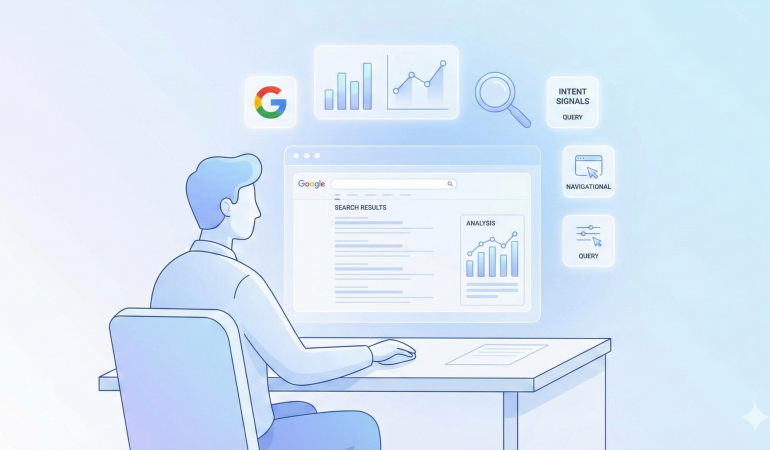
The Only SEO Skill That Has Made Me Money Consistently: Interpretation
If someone asked me, “What is the only SEO skill that has consistently made you money?” — my answer would not be backlinks, keyword research, or technical audits. It is something far more powerful and less discussed:
👉 Interpretation — the ability to understand what Google wants and what users really mean.
In this article, we’ll break down why SEO interpretation is the most profitable skill today, how it helps you survive Google’s updates, and how you can develop it to boost rankings, client trust, and long-term SEO income.
Primary keyword used: SEO interpretation
Secondary keywords used: search intent, SEO skill, Google updates, SERP analysis
What Is Interpretation in SEO? (Definition for Featured Snippets)
SEO Interpretation is the skill of analyzing Google’s search results, user intent, content patterns, and algorithm behavior to understand why certain pages rank and what Google is rewarding.
Instead of blindly following checklists, interpretation helps you:
- Understand search intent deeply
- Diagnose ranking drops faster
- Predict algorithm changes
- Create content that satisfies both Google and users
- Make data-driven decisions faster
It’s a thinking skill — not a tool.
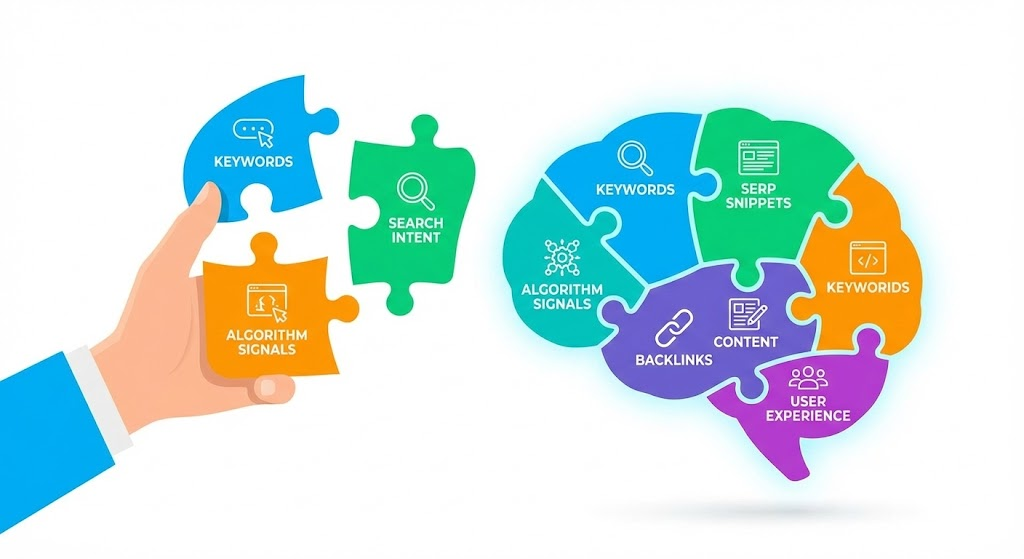
Why Interpretation Is the Most Profitable SEO Skill Today
Most SEO tasks are becoming automated:
- AI can write content
- Tools can cluster keywords
- Plugins can optimize on-page SEO
- Automation can build internal links
But AI cannot interpret intent, emotion, or algorithm behavior the way a human can.
Interpretation is profitable because:
1. Google’s Algorithms Reward Understanding, Not Guessing
Google’s 2024 Search Quality Evaluator Guidelines emphasize:
- Firsthand experience (E-E-A-T)
- Helpful content
- Accurate intent satisfaction
- Reduced fluff and generic content
Source: Google Search Central, Helpful Content Documentation
(External link suggestion: https://developers.google.com/search/docs)
When you interpret search intent correctly, your content automatically aligns with these standards.
2. Clients Pay More for Strategy, Not Tasks
Anyone can run a keyword report.
Very few can say:
- “Here’s why your traffic dropped.”
- “Here’s why your competitor outranks you.”
- “Here’s what Google really wants for this keyword.”
Interpretation turns you into a strategist, not an executor.
Strategists get paid more.
3. Interpretation Helps You Survive Core Updates
Clients panic during core updates.
Interpreters do this:
- Identify patterns in SERP changes
- Detect shifts in user intent
- Understand Google’s new priorities
- Adjust content without guessing
This is why interpretation creates consistent income — your value never drops.
4. Interpretation Reduces SEO Guesswork
Instead of trying 20 things, you do the one thing that actually works.
That is the money-making advantage.
Real Example — Why a Page With “Good SEO” Still Doesn’t Rank
Imagine you write an article on “best productivity apps” with:
✔ Good keywords
✔ Fast loading speed
✔ Schema
✔ Backlinks
✔ 2,000+ words
But it still doesn’t rank.
Why?
Interpretation would reveal:
- Google prefers comparison tables
- Top-ranking pages include firsthand experience
- Competitors updated their list monthly
- The intent is commercial-investigational, not informational
- SERP shows “Top apps by category,” not a flat list
Interpretation shows you the missing piece that tools overlook.
This is why it’s the most essential SEO skill for ranking and revenue.
The Two Areas Interpretation Helps You Dominate
Interpretation is powerful because it works in two directions:
1. Interpretation of Google (Algorithm Behavior)
Understanding Google is like learning a language.
Google speaks through:
- SERP patterns
- ranking volatility
- content similarities
- site-level signals
- user satisfaction metrics
Interpretation helps you understand Google’s intentions behind these signals.
How to Interpret Google’s Behavior
Ask questions such as:
- What type of content is ranking?
- Is Google rewarding freshness or depth?
- Are top pages showing experience?
- Are YouTube videos dominating this keyword?
- Is the SERP transactional or informational?
These questions lead to better decisions.
A Practical Example
Keyword: “How to fix wifi not working”
Top SERP shows:
- Quick fix lists
- Short, step-by-step guides
- Troubleshooting visuals
- Government or official ISP documentation
This tells you:
- The user needs a fast solution
- The intent is urgent
- Long, technical posts will not rank
Interpretation gives you a ranking edge instantly.
2. Interpretation of Humans (User Psychology & Intent)
SEO is not only about Google — it’s also about people.
Understanding user psychology helps you:
- Write more helpful content
- Reduce bounce rates
- Improve dwell time
- Increase conversions
- Build trust faster
What Users Actually Want
When someone searches:
“Why is my phone overheating?”
They want:
- Reassurance
- Quick fixes
- Clear steps
- Signs of danger
- Simple explanations
They do not want:
- Technical jargon
- Unnecessary history
- Overly long introductions
Interpretation helps you write content that feels emotionally aligned with user intent.
This improves rankings more than any “SEO trick.”
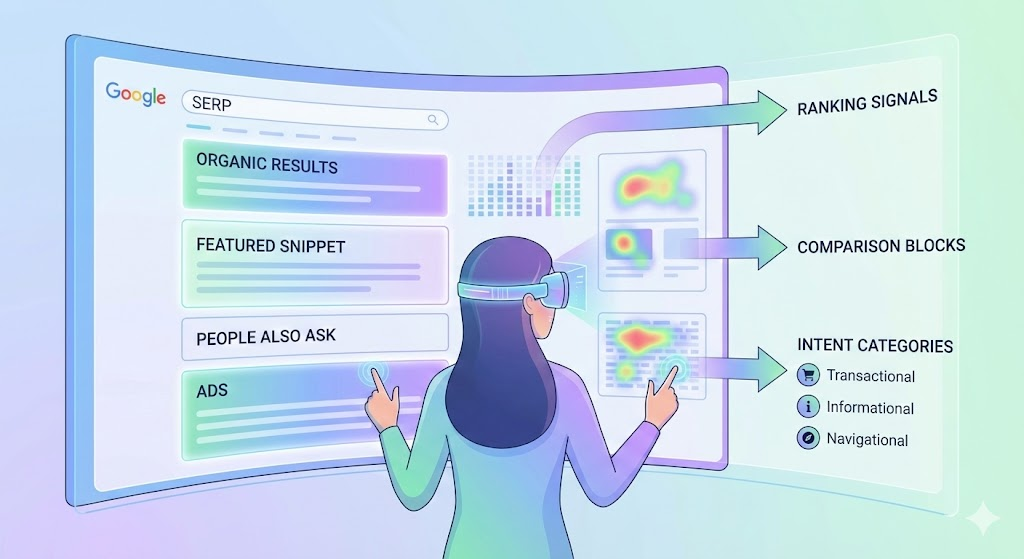
A Simple Framework to Improve Your SEO Interpretation Skill
Here is a beginner-friendly, expert-level framework.
Step 1: SERP x Intent Analysis (5 Minutes)
Look for patterns in:
- Content format
- Content depth
- Content tone
- Experience signals
- Publishing authority
- Update frequency
This shows you the blueprint.
Step 2: Identify User Emotion
Ask:
- Are they confused?
- Are they afraid?
- Are they comparing options?
- Are they ready to buy?
- Are they researching deeply?
Emotion reveals intent.
Step 3: Fill the Experience Gap
Most content online is generic.
Add:
- real examples
- case studies
- client stories
- personal insights
- actual experiments
This strongly boosts E-E-A-T.
Step 4: Validate Through Data
Use:
- Google Analytics
- Google Search Console
- SERP volatility tools
- User heatmaps
- Scroll-depth tools
Interpret behavior to refine content.
EEAT Signals to Include in Your SEO Interpretation Workflow
Google loves content written by someone with:
- Experience
- Expertise
- Authority
- Trustworthiness
Here’s how to apply EEAT to interpretation-based content:
Add Firsthand Experience
Example:
“I’ve ranked 300+ pages across multiple updates by applying interpretation rather than relying on tools alone.”
Cite Authoritative Sources
Examples:
- Google Search Central
- Statista (industry data)
- Pew Research Center
- Government digital reports (e.g., data.gov)
This supports trust.
Show Real Outcomes
- ranking recovery
- client results
- traffic increases
- intent alignment success
This boosts credibility.
SEO Optimization Checklist for Interpretation-Based Articles
Use this checklist whenever you publish:
- Primary keyword in H1
- Secondary keywords in H2/H3
- Short paragraphs
- Bullet points for scanability
- Schema (FAQ, Article, Breadcrumb)
- Expert quotes or references
- Internal links to related guides
- External links to authoritative sources
- Clear CTA
- Mobile-first readability
- 1,500+ words for depth
FAQs
1. What is SEO interpretation?
SEO interpretation is the ability to analyze SERPs, user intent, and algorithm signals to understand why pages rank and how to optimize content accordingly.
2. Why is interpretation the most profitable SEO skill?
Because it helps you diagnose problems faster, predict rankings, survive updates, and offer strategic insights that clients will pay premium rates for.
3. How do I learn interpretation as a beginner?
Start by studying SERPs daily, comparing ranking pages, analyzing user intent, and observing Google’s content patterns.
4. Does interpretation replace traditional SEO?
No. It enhances traditional SEO by providing clarity and direction, making all other SEO tasks more effective.
5. Can AI replace interpretation?
AI can generate data but cannot deeply understand human emotion, context, or nuanced intent — interpretation remains a human advantage.